Automotive PCB fabrication is more than producing a circuit board for a vehicle. It is about building a reliable electrical foundation for control modules, lighting systems, sensors, power electronics, battery systems, and connected automotive devices where heat, vibration, current load, impedance stability, and long service life all matter. This article explains how automotive PCB projects should be approached from materials, certifications, manufacturing control, case experience, and supplier selection.
EBest Circuit (Best Technology) provides automotive PCB fabrication with 20 years of engineering-driven manufacturing experience. We support PCB fabrication, DFM review, material selection, impedance control, surface finish control, testing reports, traceability, and PCBA assembly as an extended service when customers need a complete build. For automotive PCB projects, pls feel free to send Gerber files, stack-up, specifications, and testing requirements to sales@bestpcbs.com for engineering review.
Automotive PCB Fabrication Services by EBest Circuit (Best Technology)
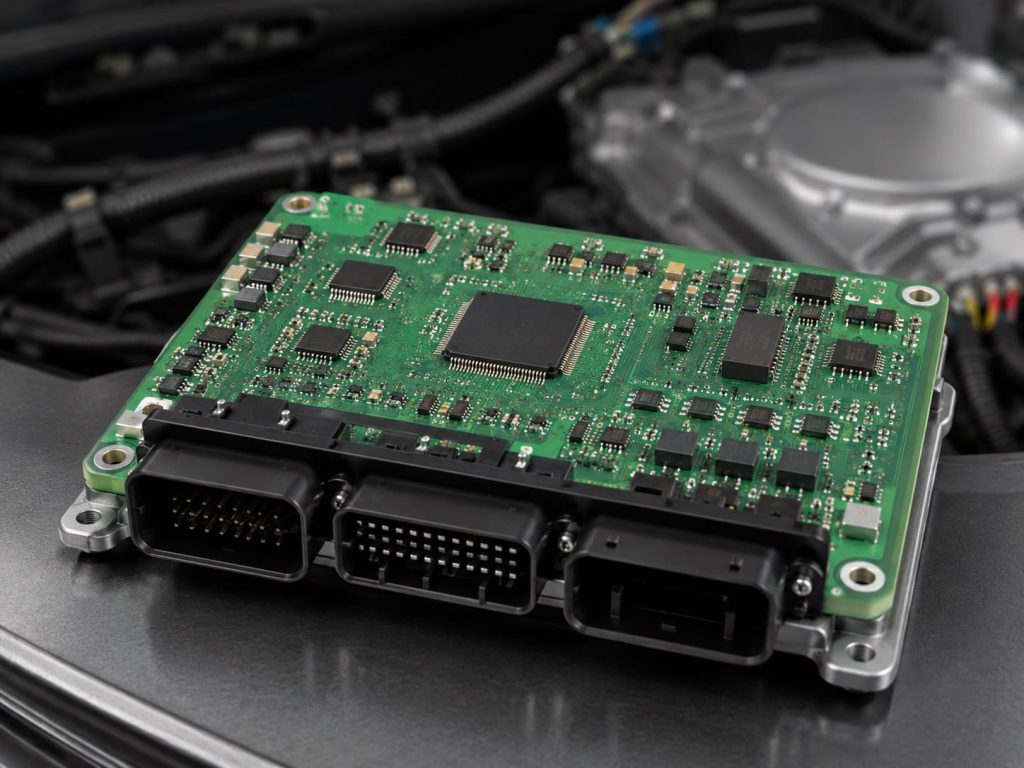
Automotive PCB fabrication requires stable production, controlled materials, accurate stack-up, and reliable inspection. For automotive electronics, the board is not just a carrier for components; it directly affects electrical safety, thermal behavior, signal quality, and long-term reliability.
EBest Circuit (Best Technology) supports automotive PCB fabrication for different vehicle electronic applications, including:
- Automotive lighting PCBs
Used in LED headlights, tail lights, daytime running lights, interior lighting, and signal lamps. These boards often need metal core, heavy copper, or high-thermal materials to manage heat. - Control module PCBs
Used in body control modules, motor control units, sensor controllers, and power control boards. These projects often require multilayer FR4, impedance control, and stable copper thickness. - Battery and power electronics PCBs
Used in battery management systems, charging units, power conversion, and high-current circuits. Heavy copper, high-Tg FR4, copper substrate, or ceramic PCB may be required depending on current and temperature. - Sensor and communication PCBs
Used in radar support boards, camera modules, signal processing boards, and communication-related vehicle electronics. These boards often require controlled impedance, stable dielectric performance, and precise fabrication tolerance. - Rigid-flex automotive PCBs
Used where space is limited and connector reduction is important. Rigid-flex structures help improve mechanical integration and reduce assembly complexity.
Our automotive PCB fabrication service can support prototype builds, engineering validation, small-batch production, and volume manufacturing. When required, EBest Circuit (Best Technology) can also extend support to PCBA assembly, including SMT assembly, through-hole assembly, X-ray inspection, AOI, functional testing, and box-build support. The main focus remains PCB fabrication, while assembly is available as a project extension.
PCB Material Solutions for Automotive Electronics
Material selection is one of the first decisions in automotive PCB fabrication. The right board material helps the PCB handle heat, current, vibration, soldering cycles, and long operating time.
EBest Circuit (Best Technology) helps customers choose PCB materials based on the actual electrical, mechanical, and thermal requirements of the automotive product.
Common material options include:
- High-Tg FR4 PCB
High-Tg FR4 is suitable for multilayer automotive control boards, BMS boards, sensor boards, and power management circuits. It provides better thermal stability than standard FR4 and is often selected for products exposed to higher operating temperatures. - Heavy copper PCB
Heavy copper is used for high-current automotive circuits, power conversion boards, relay control boards, and battery-related electronics. It improves current-carrying capacity and supports better heat spreading. - Metal core PCB
Aluminum PCB and copper substrate PCB are widely used in automotive LED lighting and heat-dissipation applications. These boards help move heat away from power components and LED chips. - Ceramic PCB
Ceramic PCB is used where high thermal conductivity, dimensional stability, and electrical insulation are important. It can be considered for high-power modules, LED systems, sensors, and advanced automotive electronics. - AMB ceramic PCB
AMB ceramic PCB is suitable for high-power automotive applications such as power modules, IGBT modules, SiC devices, MOSFET circuits, and EV-related power electronics. It offers strong bonding and excellent heat transfer performance. - Rigid-flex PCB
Rigid-flex boards are useful for compact automotive systems, camera modules, sensors, lighting assemblies, and space-limited electronic units. They can reduce connectors and improve mechanical reliability. - HDI PCB
HDI PCB is suitable for dense automotive electronics that require fine lines, microvias, and compact routing. It is often used in modules where board space is limited but circuit density is high.
A simple material selection view:
| PCB Material | Typical Automotive Use |
|---|---|
| High-Tg FR4 | Control modules, BMS, sensors |
| Heavy Copper | High-current and power circuits |
| Aluminum PCB | LED lighting and thermal boards |
| Copper Substrate PCB | High-power heat dissipation |
| Ceramic PCB | High-thermal and stable circuits |
| AMB Ceramic PCB | EV power modules and power devices |
| Rigid-Flex PCB | Compact automotive modules |
| HDI PCB | Dense signal and control boards |
For automotive PCB fabrication, EBest Circuit (Best Technology) does not recommend materials only by name. We review the stack-up, copper weight, thermal load, dielectric requirement, soldering process, and end-use environment before suggesting the most suitable material direction.
Automotive PCB Certifications and Compliance Support
Automotive PCB customers usually care about more than price and lead time. They also need production consistency, documentation, traceability, and compliance support. This is especially important when the PCB will be used in vehicle lighting, control systems, power electronics, or regulated electronic modules.
EBest Circuit (Best Technology) supports automotive PCB projects with quality systems and documentation practices that help customers manage project risk.
Key compliance and quality support may include:
- IATF16949 support
Important for automotive-related production management, process control, and continuous improvement. - ISO9001 quality management
Supports stable manufacturing processes, documented procedures, and consistent product quality. - ISO13485 support
Useful when customers also need medical-grade documentation discipline or cross-industry reliability control. - AS9100D support
Relevant for high-reliability projects that need strong traceability and controlled production management. - UL support
Important for material recognition, production flow control, and PCB safety-related requirements. - RoHS compliance
Supports environmental compliance for electronic products sold into international markets. - IPC standard manufacturing
Automotive PCB projects commonly reference IPC standards such as IPC-6012 for rigid PCB fabrication requirements and IPC-A-600 for board acceptance criteria.
For documentation, automotive PCB buyers may request:
- Certificate of Conformance
- Electrical test report
- Microsection report
- Copper thickness report
- Impedance test report
- Solderability test report
- Material compliance document
- First Article Inspection report when needed
- Production traceability record
- Packaging and shipment inspection record
For automotive PCB fabrication, documentation should not be treated as an afterthought. EBest Circuit (Best Technology) can provide controlled production records and inspection reports based on the customer’s project requirements, helping engineering and purchasing teams verify that the boards match the approved specification.
Automotive PCB Fabrication Case Studies
A real automotive PCB fabrication case is often more useful than a long capability list. It shows how the manufacturer controls material, impedance, documentation, and final testing in an actual automotive electronics project.
The following case is based on a multilayer automotive control PCB. The customer background is generalized, while the key board requirements are kept to show the manufacturing focus.
Project Overview
- The project required a 12-layer FR4 PCB for an automotive electronic control application. The board used high-Tg ISOLA 408HR material and needed controlled impedance, ENIG surface finish, RoHS-compliant material, and complete outgoing quality reports.
- For this automotive PCB fabrication project, the customer cared most about stable stack-up, electrical performance, production discipline, and shipment verification.
Customer Requirements
The main requirements included:
- 12-layer FR4 multi-layer PCB
- ISOLA 408HR High-Tg 170 material
- Single-ended and differential impedance control
- ENIG surface finish with controlled nickel and gold thickness
- IPC-6012 Class 2 fabrication standard
- RoHS-compliant PCB material
- UL-compliant production flow
- 100% continuity test before shipment
- COC, microsection, E-test, solderability, copper thickness, and impedance reports
Manufacturing Focus
This automotive PCB fabrication case required careful control in several key areas:
- Material and stack-up control
The 12-layer structure needed stable lamination, controlled dielectric thickness, and verified high-Tg material selection. - Impedance control
The board included both single-ended and differential impedance. Trace geometry, dielectric thickness, and copper thickness had to stay within the approved tolerance. - Surface finish control
ENIG thickness was controlled to support solderability, surface stability, and assembly reliability. - Fabrication note control
The project did not allow additional copper stealing. All unspecified holes followed N.C. drill data, and all slots were plated unless clearly marked as unplated. - Final verification
Each board required 100% continuity testing before shipment, with outgoing reports prepared for customer review.
EBest Circuit (Best Technology)’s Support
EBest Circuit (Best Technology) reviewed the Gerber files, stack-up, fabrication notes, impedance requirements, and report requirements before production.
Our engineering and production team supported the project through:
- DFM review before fabrication
- Material and stack-up confirmation
- Controlled impedance manufacturing
- ENIG thickness control
- Drill and slot requirement review
- 100% electrical continuity testing
- Outgoing quality report preparation
- Shipment inspection and traceability control
Project Result
- The automotive PCB fabrication project was completed with controlled material, impedance, surface finish, and final testing. The customer received boards with the required outgoing reports, helping their engineering team move forward with internal validation.
Case Board Specifications
| Item | Key Specification |
|---|---|
| Board Type | 12-layer FR4 multilayer PCB |
| Board Thickness | 2.3 mm ±10% |
| Material | ISOLA 408HR High-Tg 170 |
| Electrical Performance | Dk max. 3.7 @ 2GHz, Df max. 0.01 @ 10GHz |
| Copper Thickness | 1 oz on selected layers, 0.5 oz on other layers |
| Surface Finish | ENIG with controlled nickel and gold thickness |
| Impedance Control | Single-ended and differential impedance, ±10% tolerance |
| Compliance | RoHS material, UL production flow |
| Fabrication Standard | IPC-6012 Class 2 |
| Testing | 100% continuity test before shipment |
| Outgoing Reports | COC, microsection, E-test, solderability, copper thickness, and impedance reports |
This case shows how EBest Circuit (Best Technology) supports automotive PCB fabrication projects that require more than basic board production. For automotive electronics, the value is not only making the PCB, but controlling the material, process, testing, and documentation behind it.
How EBest Circuit (Best Technology) Supports Automotive PCB Projects from Prototype to Production
Automotive PCB projects usually move through several stages before stable production. A good PCB fabrication supplier should support the customer from early design review to production delivery, not only quote the board after the files are finished.
EBest Circuit (Best Technology) supports automotive PCB customers through each project stage.
1. Design and DFM Review
Before production, our engineering team reviews key PCB fabrication details:
- Layer stack-up
- Copper weight
- Minimum trace and spacing
- Drill size and aspect ratio
- Annular ring
- Controlled impedance
- Material selection
- Surface finish
- Slot and routing requirements
- Warpage risk
- Panelization
- Test point and inspection requirements
This helps reduce manufacturing risk before the board enters production.
2. Prototype Fabrication
Prototype fabrication helps customers verify electrical design, mechanical fit, thermal performance, and assembly compatibility.
For automotive PCB prototypes, common review points include:
- Whether the selected material can support the operating temperature
- Whether the copper weight matches the current requirement
- Whether impedance can be held within tolerance
- Whether the solder mask, finish, and hole design match assembly needs
- Whether the board structure can be scaled to small-batch or volume production
3. Small-Batch Validation
Small-batch production is useful before mass production. It gives the customer a practical view of process stability, yield, and test performance.
EBest Circuit (Best Technology) can support small-batch automotive PCB fabrication for:
- Engineering validation
- Pilot production
- Pre-production builds
- Customer sample approval
- Assembly trial runs
- Reliability test preparation
4. Volume Manufacturing
When the project moves into volume production, process consistency becomes more important than speed alone.
Key production controls include:
- Confirmed material source
- Stable stack-up
- Controlled lamination
- Copper thickness verification
- Impedance testing
- Electrical testing
- Lot traceability
- Outgoing quality reports
- Packaging and shipment control
5. Optional PCBA Extension
Some automotive customers need more than bare PCB fabrication. In that case, EBest Circuit (Best Technology) can also support PCBA assembly for FR4 PCB, high-Tg PCB, metal core PCB, rigid-flex PCB, heavy copper PCB, ceramic PCB, and HDI PCB projects.
PCBA support may include:
- SMT assembly
- Through-hole assembly
- Component sourcing
- AOI inspection
- X-ray inspection
- Functional testing
- Conformal coating when required
- Box-build assembly for selected projects
The core value remains clear: customers can start with automotive PCB fabrication and extend to assembly and testing when the project requires a more complete manufacturing route.
Quality Control for Automotive PCB Fabrication
Quality control in automotive PCB fabrication must be built into the process, not only checked at the end. A board may look acceptable visually but still fail because of impedance drift, weak solderability, insufficient copper thickness, plating issues, or hidden manufacturing defects.
EBest Circuit (Best Technology) applies quality control across the full PCB manufacturing process.
Important quality control points include:
- Incoming material inspection
PCB laminate, copper foil, solder mask, and process materials are checked according to project requirements. - DFM and engineering review
Manufacturing risks are reviewed before production, especially for multilayer boards, controlled impedance boards, heavy copper boards, and special material boards. - Inner layer inspection
Inner layers are checked before lamination to reduce the risk of hidden defects in multilayer PCBs. - Lamination control
Lamination parameters are controlled to maintain board thickness, dielectric structure, and layer alignment. - Drilling and plating control
Hole quality, copper plating, via reliability, and slot requirements are monitored during fabrication. - Impedance control
Controlled impedance coupons or test methods are used when required by the customer specification. - Solder mask and surface finish inspection
Solder mask coverage, legend quality, ENIG thickness, HASL, OSP, or other finishes are inspected based on the approved requirement. - Electrical testing
100% electrical testing can be performed to check open and short circuits before shipment. - Final inspection and reporting
Outgoing quality control verifies appearance, dimensions, reports, packing, and customer-specific requirements.
Common inspection and test methods include:
| Quality Item | Purpose |
|---|---|
| AOI | Checks circuit pattern defects |
| Electrical Test | Confirms continuity and isolation |
| Microsection | Verifies plating and internal structure |
| Impedance Test | Confirms signal control |
| Copper Thickness Test | Checks copper build-up |
| Solderability Test | Confirms surface finish performance |
| Visual Inspection | Checks appearance and workmanship |
| Final QC | Confirms shipment readiness |
EBest Circuit (Best Technology) also uses MES traceability to support production tracking. This helps customers trace key production information, batch status, process flow, and inspection records more efficiently. For automotive PCB fabrication, this type of traceability is important because buyers need confidence not only in one shipment, but also in repeat production consistency.
Why Choose EBest Circuit (Best Technology) for Automotive PCB Fabrication?
Choosing an automotive PCB fabrication supplier is not only about finding a board factory. The better question is whether the supplier can understand the project requirement, prevent avoidable manufacturing problems, and support the customer from engineering review to stable delivery.
EBest Circuit (Best Technology) is suitable for automotive PCB customers who need more than a basic PCB quotation.
Key reasons to work with us include:
- 20 years of PCB manufacturing experience
We have long-term experience with PCB fabrication for industrial, automotive, medical, communication, lighting, power, and high-reliability electronics. - Engineering-driven project support
Our team can review Gerber files, stack-up, materials, impedance requirements, copper thickness, fabrication notes, and assembly needs before production. - Wide PCB material capability
We support FR4, high-Tg FR4, heavy copper, aluminum PCB, copper substrate PCB, ceramic PCB, AMB ceramic PCB, rigid-flex PCB, HDI PCB, and high-frequency PCB projects. - Automotive-related quality system support
We can support automotive PCB projects with IATF16949, ISO9001, UL, and related quality documentation requirements. - DFM support before production
DFM review helps customers avoid problems related to hole design, spacing, stack-up, impedance, solder mask, edge clearance, panelization, and manufacturability. - Controlled testing and reporting
We can provide electrical test reports, microsection reports, impedance reports, copper thickness reports, solderability reports, COC, and other outgoing documents based on customer requirements. - MES traceability
Production traceability helps customers track manufacturing status and batch information more clearly. - Prototype to production capability
We support engineering samples, small-batch production, and mass production, helping customers move through the project lifecycle with one manufacturing partner. - Optional PCBA assembly support
When customers need assembly after bare board fabrication, we can support component sourcing, SMT assembly, through-hole assembly, AOI, X-ray, functional testing, and box-build service.
For automotive PCB fabrication, EBest Circuit (Best Technology) combines board manufacturing, engineering review, quality control, reporting, and delivery support. Customers who need a reliable PCB partner can send project files and requirements to sales@bestpcbs.com for review.
FAQs About Automotive PCB Fabrication
What is automotive PCB fabrication?
- Automotive PCB fabrication is the manufacturing process for printed circuit boards used in vehicle electronic systems. These boards may be used in lighting, power control, sensors, battery systems, control modules, radar support circuits, and other automotive electronics.
How is automotive PCB fabrication different from standard PCB fabrication?
- Automotive PCB fabrication usually requires stronger control over materials, heat resistance, copper thickness, dimensional tolerance, impedance, testing, documentation, and traceability. The board must support stable performance in demanding vehicle environments.
What materials are commonly used for automotive PCB fabrication?
- Common materials include high-Tg FR4, heavy copper, aluminum substrate, copper substrate, ceramic, AMB ceramic, rigid-flex materials, and HDI structures. The right choice depends on thermal load, current, signal speed, space, and reliability requirements.
Is High-Tg FR4 suitable for automotive PCBs?
- Yes. High-Tg FR4 is commonly used for automotive control boards, BMS boards, sensor boards, and multilayer electronics where better thermal stability is required. It is often a practical choice when the project does not require metal core or ceramic material.
When should metal core PCB be used in automotive electronics?
- Metal core PCB is suitable when heat dissipation is a major concern. It is commonly used in automotive LED lighting, power LED modules, and some high-thermal control applications.
When is ceramic PCB used in automotive PCB fabrication?
- Ceramic PCB is used when high thermal conductivity, stable insulation, and dimensional stability are important. It may be selected for power modules, LED systems, sensors, and advanced automotive electronics.
What is AMB ceramic PCB used for in automotive applications?
- AMB ceramic PCB is often used in high-power applications such as EV power modules, IGBT modules, SiC devices, MOSFET circuits, and other power electronics that require strong thermal performance and reliable copper bonding.
Do automotive PCBs require controlled impedance?
- Many automotive PCBs require controlled impedance, especially boards used for communication, sensors, signal processing, radar support, and high-speed control circuits. The impedance tolerance should be confirmed during stack-up design and fabrication review.
What documents can be provided for automotive PCB fabrication?
- Depending on the project requirement, EBest Circuit (Best Technology) can provide COC, electrical test report, microsection report, solderability report, copper thickness report, impedance report, material compliance document, and other outgoing quality records.
Can EBest Circuit (Best Technology) support automotive PCB assembly after fabrication?
- Yes. Although automotive PCB fabrication is the main focus, we can also support PCBA assembly when customers need a complete manufacturing solution. This may include component sourcing, SMT assembly, through-hole assembly, AOI, X-ray inspection, functional testing, and box-build support.
How do I choose an automotive PCB fabrication manufacturer?
- Look for a supplier with automotive project experience, material selection capability, DFM support, controlled testing, quality documentation, traceability, and stable production capacity. Price is important, but engineering support and repeatable quality are more important for automotive electronics.
How can I request a quotation for automotive PCB fabrication?
- You can send Gerber files, stack-up, BOM, assembly drawing, material requirements, impedance requirements, testing requirements, and expected quantity to sales@bestpcbs.com. EBest Circuit (Best Technology) will review the files and provide feedback for your automotive PCB fabrication project.
Tags: Automotive PCB, automotive pcb fabrication, High-Reliability Automotive Electronics PCBA, pcb fabrication
PakarPBN
A Private Blog Network (PBN) is a collection of websites that are controlled by a single individual or organization and used primarily to build backlinks to a “money site” in order to influence its ranking in search engines such as Google. The core idea behind a PBN is based on the importance of backlinks in Google’s ranking algorithm. Since Google views backlinks as signals of authority and trust, some website owners attempt to artificially create these signals through a controlled network of sites.
In a typical PBN setup, the owner acquires expired or aged domains that already have existing authority, backlinks, and history. These domains are rebuilt with new content and hosted separately, often using different IP addresses, hosting providers, themes, and ownership details to make them appear unrelated. Within the content published on these sites, links are strategically placed that point to the main website the owner wants to rank higher. By doing this, the owner attempts to pass link equity (also known as “link juice”) from the PBN sites to the target website.
The purpose of a PBN is to give the impression that the target website is naturally earning links from multiple independent sources. If done effectively, this can temporarily improve keyword rankings, increase organic visibility, and drive more traffic from search results.
Comments are closed, but trackbacks and pingbacks are open.