How to choose MCPCB dielectric material for high-power LEDs? This guide covers material functions, types, selection criteria, and design best practices for high-power LED applications.
Are you worried about these issues?
- LED temperature is too high, causing accelerated light decay?
- Uneven thickness of insulation layer causes short circuit risk?
- Is it difficult to control the cost of small batch orders?
Best Technology provide you with:
- Free thermal analysis report: Dielectric layer thermal optimization plan is issued within 48 hours
- Full process quality control: third-party test data is provided for each batch (including thermal conductivity/voltage resistance test)
- Customized formula: adjust dielectric layer parameters according to power density (0.5-4.0W/m·K optional)
Welcome to contact us if you have any inquiry for MCPCB: sales@bestpcbs.com.
What Is MCPCB Dielectric Material?
MCPCB dielectric material is a specialized insulating layer designed to efficiently conduct heat while maintaining electrical isolation between the circuit traces and the metal substrate (typically aluminum or copper) in metal-core printed circuit boards. Unlike traditional FR-4 laminates, this material exhibits significantly higher thermal conductivity (typically 1â3 W/m·K), making it essential for high-power electronic applications where heat dissipation is critical.
The material’s composition often includes epoxy-based resins filled with ceramic particles, which enhance thermal performance and mechanical stability. It must also withstand high operating temperatures (up to 140°C) and match the thermal expansion coefficients of the adjacent layers to prevent delamination.
What Are Functions of MCPCB Dielectric Materials?
- Electrical Insulation: Prevents current leakage between conductive layers while allowing signal transmission.
- Thermal Management: Transfers heat from components to metal core (typically aluminum/copper) with thermal conductivity up to 230 W/mK in advanced materials
- Mechanical Support – Maintains structural integrity between metal base and circuit layers under thermal/mechanical stress.
- Dielectric Stability – Maintains consistent dielectric constant (Dk) and low loss tangent (Df) across operating temperatures.
- Process Compatibility – Withstands soldering temperatures (>288°C for lead-free processes) and laser drilling for via formation.
- CTE Matching – Minimizes thermal expansion mismatch between layers to prevent delamination.
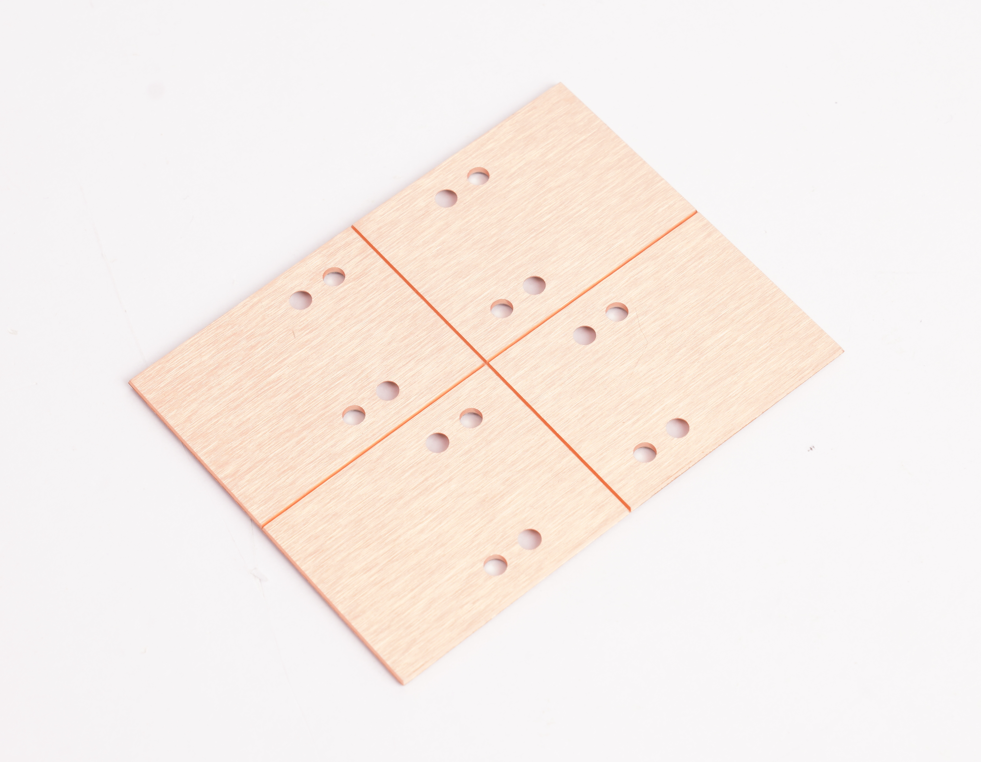
What Are Applications of MCPCB Dielectric Materials?
Applications of MCPCB dielectric materials:
- LED Lighting – Architectural/automotive/industrial high-power LED modules.
- Automotive Systems – ADAS radar modules, EV battery management.
- Power Electronics – DC-DC converters, high-current switching supplies.
- Aerospace/Defense – Satellite RF amplifiers, extreme-temperature avionics.
- AI/HPC Hardware – 2.5D/3D IC packaging for AI accelerators.
- Motor Drives – Industrial VFDs, servo controller IGBT modules.
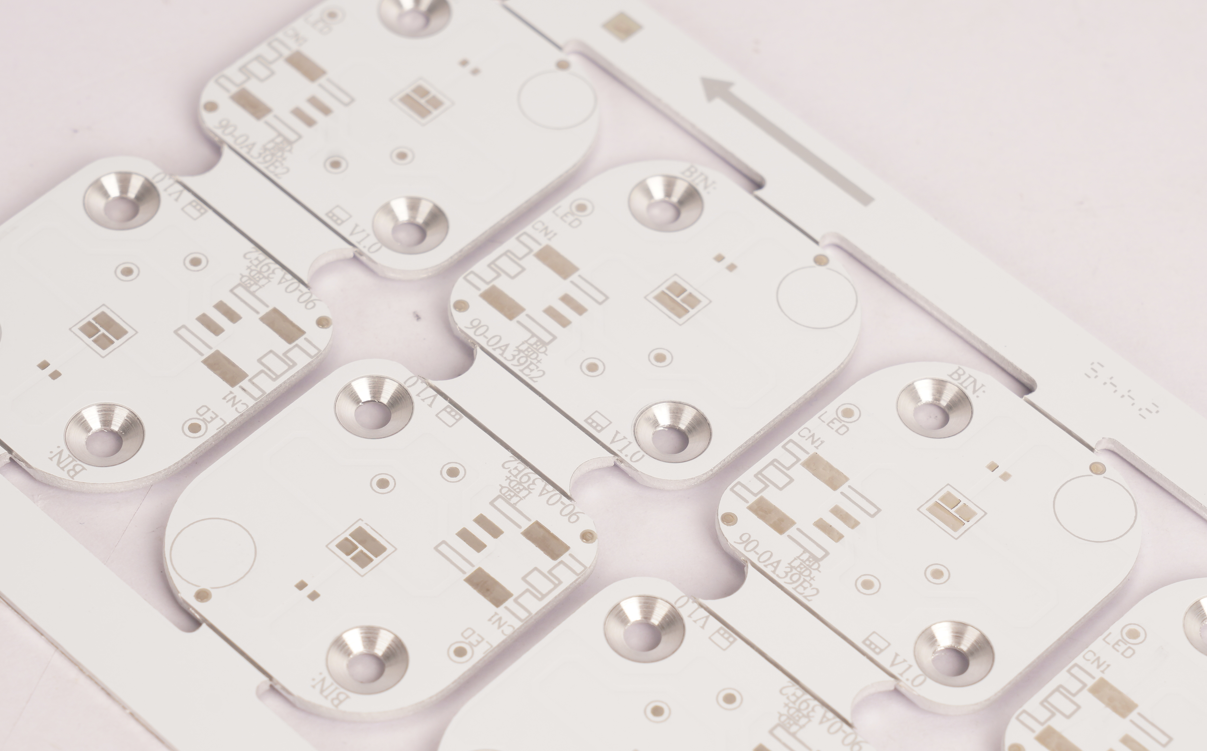
MCPCB Dielectric Material Dielectric Constant
| Material Type | Dielectric Constant (εr) |
| Ceramic-filled Polymer | 4.0-5.0 |
| Epoxy Resin | 3.5-4.5 |
| Polyimide | 3.2-3.8 |
| AlâOâ-filled Composite | 4.2-4.8 |
| AlN-filled Composite | 8.5-9.5 |
| PTFE | 2.0-2.1 |
What Are Types of MCPCB Dielectric Material?
1. Ceramic-filled Polymer
- Specialty blends with ceramic particles for thermal conductivity (1.0-3.0 W/m·K).
- Used in Bergquist IMS series for LED/automotive applications.
2. Epoxy Resin
- Standard dielectric material with low thermal conductivity (0.3-0.8 W/m·K).
- Cost-effective for low-power MCPCBs.
3. Polyimide
- High-temperature-resistant polymer (up to 260°C).
- Used in aerospace/defense MCPCBs requiring thermal stability.
4. AlâOâ-filled Composite
- Oxide ceramic filler enhances thermal performance (3.5-5.0 W/m·K).
- Common in Dow/Laird high-reliability products.
5. AlN-filled Composite
- Ultra-high thermal conductivity (170-230 W/m·K).
- Premium option for EV battery/RF power modules.
6. PTFE (Polytetrafluoroethylene)
- Low-loss dielectric for high-frequency applications.
- Used in RF/microwave MCPCB designs.
How to Choose MCPCB Dielectric Material for High-Power LEDs?
1. Core Performance Priorities
Thermal Conductivity
- Select â¥2.0 W/m·K materials (e.g., AlN composites) for LED arrays >50W/cm².
- Avoid epoxy resins (<1.0 W/m·K) in high-power applications.
- Verify via ASTM D5470 thermal impedance testing.
Electrical Insulation
- Require breakdown voltage â¥5kV and volume resistivity â¥10¹²Ω·cm.
- Mandate UL 94 V-0 flammability certification.
- Validate performance at 85â/85%RH humidity.
CTE Matching
- Align dielectric CTE with copper (17-18ppm/â) and aluminum (23-24ppm/â).
- Use AlâOâ (6-8ppm/â) with buffer layers for CTE mismatch compensation.
2. Material Selection Strategy
Power Density <3W/cm² (General Lighting)
- Aluminum MCPCB (1.5-2.0W/m·K) with prepreg thickness 0.1-0.2mm.
- Cost-optimized FR-4 alternative with additional heat sinks.
Power Density 3-10W/cm² (Automotive/Industrial)
- Copper MCPCB (3.0-4.5W/m·K) + AlN dielectric layer.
- Require vacuum lamination process with >95% void-free rate.
Power Density >10W/cm² (Laser/UV LEDs)
- DBC ceramic substrate (AlN/BeO) with MIL-STD-883 thermal shock compliance.
- Partner with suppliers providing original sintering curves.
3. Supplier Evaluation Checklist
Technical Compliance
- Provide dielectric thickness vs. thermal resistance curves.
- Share third-party test reports for RoHS/REACH compliance.
Production Capability
- Confirm brown oxidation process uses chromium-free formulas.
- Validate line width accuracy ±10μm and solder mask 288â resistance.
Cost Structure
- Request material cost breakdown (copper 35%/dielectric 40%).
- Negotiate copper price adjustment clauses for ±5% fluctuations.
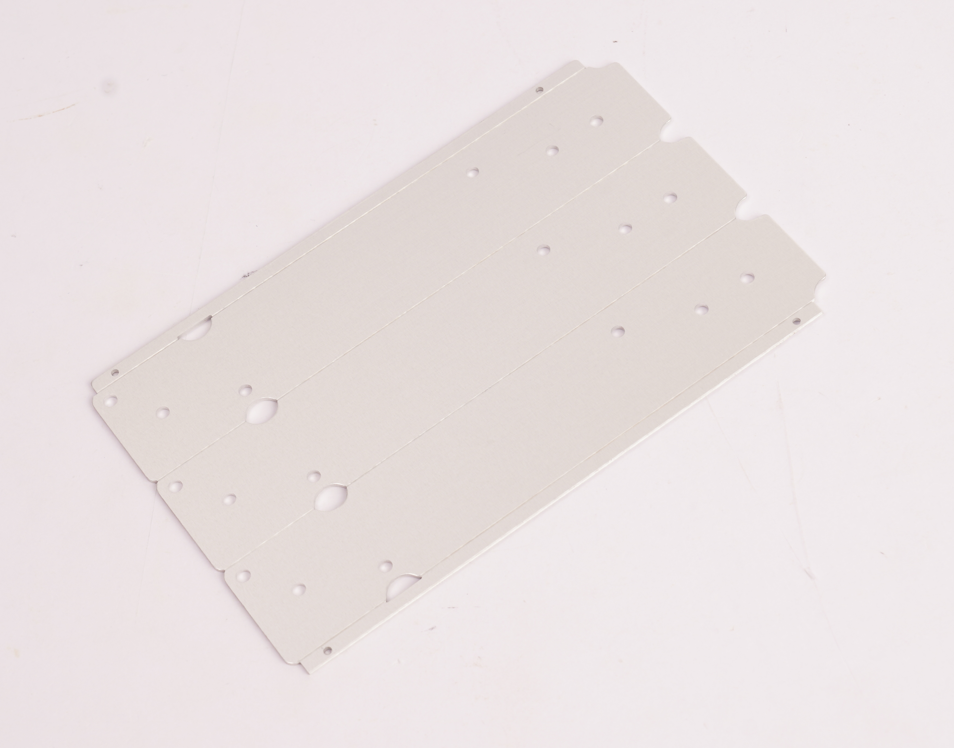
High-Power LED MCPCB Design Guideline
1. Requirement Analysis
- Define LED power density (W/cm²), operating voltage, and thermal budget.
- Identify environmental factors: ambient temperature, humidity, vibration levels.
- Set cost targets: balance material quality with production volume.
2. Material Selection Strategy
- Low Power (<3W/cm²): Aluminum MCPCB with 1.5-2.0W/m·K dielectric.
- Medium Power (3-10W/cm²): Copper MCPCB + AlN dielectric layer.
- High Power (>10W/cm²): DBC ceramic substrate (AlN/BeO).
3. Layout Optimization
- Place LEDs in matrix pattern with â¥2mm spacing between high-power components.
- Use dedicated traces for power/ground (â¥1mm width for >2A currents).
- Avoid sharp angles in copper traces to prevent hotspots.
4. Thermal Management
- Implement thermal vias under LED pads (diameter â¥0.5mm, pitch â¤1.5mm).
- Use graphite sheets for lateral heat spreading in compact designs.
- Validate thermal performance with IR camera testing.
5. Prototype Validation
- Conduct 72-hour burn-in test at 85â ambient temperature.
- Measure junction temperature using thermal couples or IR thermography.
- Verify insulation resistance after 168hrs at 85%RH humidity.
6. Production Readiness
- Require suppliers to provide PPAP documentation for critical materials.
- Implement SPC for dielectric layer thickness (±10% tolerance).
- Use AOI systems for solder paste inspection and component alignment.
Why Choose Best Technology as MCPCB Manufacturer?
Reasons why choose us as your MCPCB manufacturer:
- High-Quality Dielectric Material Solution – Provides a high-performance insulating layer with a thermal conductivity of 2.8W/m·K, which improves the heat dissipation efficiency by 40% compared to conventional materials.
- 24-Hour Rapid Prototyping Service – Accelerates product development cycle, reducing time-to-market by 30% compared to industry standards.
- Fast Lead Times (7-15 days for bulk orders) â Shorten production cycles by 30% compared to competitors.
- 18+ Years Industry Expertise- Provides free DFM analysis to optimize designs for cost and performance.
- Competitive Pricing with No Hidden Fees – Delivers 15â20% cost savings compared to European suppliers.
- No-MOQ Flexibility â Start with small batches to test markets before scaling up.
- Global Logistics Support â Hassle-free shipping to 50+ countries with customs expertise.
- One-Stop Solution â From PCB design to assembly, reduce supplier management complexity.
- 24/7 Technical Support â Engineers on standby to resolve issues within 4 hours.
- Long-Term Partnership Pricing â Volume discounts and flexible payment terms for repeat clients.
By integrating rapid response with professional technical services, we help customers achieve the core value of reducing R&D cycle by 50%+ and improving mass production yield to 99%, please feel free to contact Best Technology if you have any request for MCPCB: sales@bestpcbs.com.
Tags: MCPCB, MCPCB Dielectric Material
You can leave a response, or trackback from your own site.
News
Berita Olahraga
News
Berita Terkini
Berita Terbaru
Berita Teknologi
Seputar Teknologi
Drama Korea
Resep Masakan
Pendidikan
Berita Terbaru
Berita Terbaru
Berita Terbaru
Comments are closed, but trackbacks and pingbacks are open.